

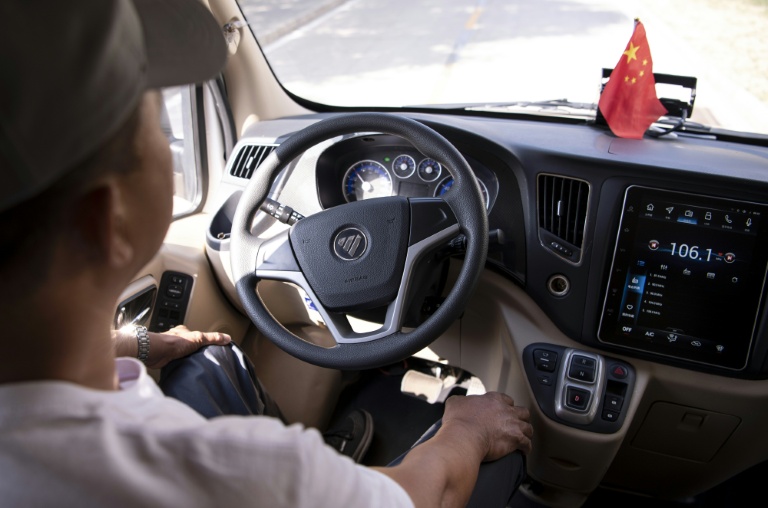
In a landmark move that sets a clear legal precedent for the age of intelligent vehicles, China’s Supreme People’s Court has issued a definitive ruling: drivers remain fully responsible for their vehicles—criminally and legally—even when assisted or autonomous driving systems are activated. The ruling, published on February 13, 2026, as part of the court’s 48th batch of guiding cases, explicitly states that “in-vehicle assisted driving systems cannot replace the human driver as the subject of driving” .
This guidance comes at a critical time as Chinese tech companies and carmakers pour billions into autonomous driving technology, racing to outperform domestic and international rivals . However, following high-profile incidents and growing concerns over driver inattention, the judiciary has drawn a firm line in the sand regarding liability.
The “Wang Qun” Case: A Wake-Up Call
The ruling centers on a disturbing case from Zhejiang province that illustrates the dangerous misuse of technology. In September 2025, a defendant identified as Wang Qun consumed alcohol before getting behind the wheel .
After initially driving home, Wang drove out again, activated his vehicle’s assisted driving function, and set a destination. To bypass the car’s safety features—which typically monitor driver attentiveness through steering wheel sensors—he used an illegally purchased aftermarket device known as a “smart driving god tool” (智驾神器). This device tricked the system into believing a driver was in control, allowing Wang to move to the passenger seat and fall asleep while the vehicle navigated on autopilot .
The car eventually came to a stop in the middle of a road in Linping District, Hangzhou, obstructing traffic until bystanders noticed the seemingly driverless vehicle and alerted the police. Upon arrival, officers found Wang asleep in the passenger seat. A breathalyzer test and subsequent blood analysis revealed a blood alcohol content of 114.5mg per 100ml, well above the legal limit .
The Legal Precedent: No ‘Digital Alibi’
The central legal question was whether Wang could be convicted of dangerous driving given that he was not physically in the driver’s seat or holding the steering wheel at the time the car was in motion.
The Supreme People’s Court’s answer was a resounding yes. The court ruled that by activating the assisted driving function and then deliberately evading the system’s safety monitoring, Wang remained the operator of the vehicle.
“The driver who activates the in-vehicle assisted driving function is still the person actually performing the driving tasks and bears the responsibility to ensure driving safety,” the court stated in its guiding case .
The court further clarified that even if the driver is not in the main driver’s seat or physically操控 the vehicle, they are still considered the “driving subject” and must bear full criminal liability. Wang was subsequently sentenced to one month and fifteen days of criminal detention and fined 4,000 yuan (approximately $560) for the crime of dangerous driving. The verdict has taken effect as no appeal was filed .
Broader Implications for Drivers and the Auto Industry
This ruling serves as a critical warning to consumers who may overestimate the capabilities of current vehicle technology. The court explicitly warned against the growing trend of drivers becoming inattentive—playing with their phones or even sleeping—after activating these systems .
By issuing this as a “guiding case,” the Supreme People’s Court has made this interpretation binding on lower courts nationwide when deciding similar cases. This means that using assisted driving features is not a legal defense for negligence or reckless behavior; it is merely an aid, not a replacement, for the driver .
The announcement is part of a broader effort by Beijing to tighten safety regulations in the automotive sector. It follows a high-profile crash in March 2025 that killed three college students, which raised serious concerns about how cars are marketed as being capable of autonomous driving .
A Drop in Traffic Crimes, A Focus on Safety
The ruling was published alongside statistics showing that China’s road traffic safety situation remained generally stable in 2025. Courts nationwide handled over 43,000 first-instance cases involving traffic accident crimes, down more than 3 percent year on year. Similarly, first-instance dangerous driving cases totaled more than 230,000, a drop of nearly 16 percent from the previous year .
Despite the decline, the court emphasized the need to address “difficult and complex legal application problems,” particularly those arising from new technologies. The message from China’s highest court is unequivocal: technology can assist, but the human behind the wheel is always ultimately in charge. As the court urged citizens, the principle remains: “Hold the steering wheel, keep safety in mind” .