

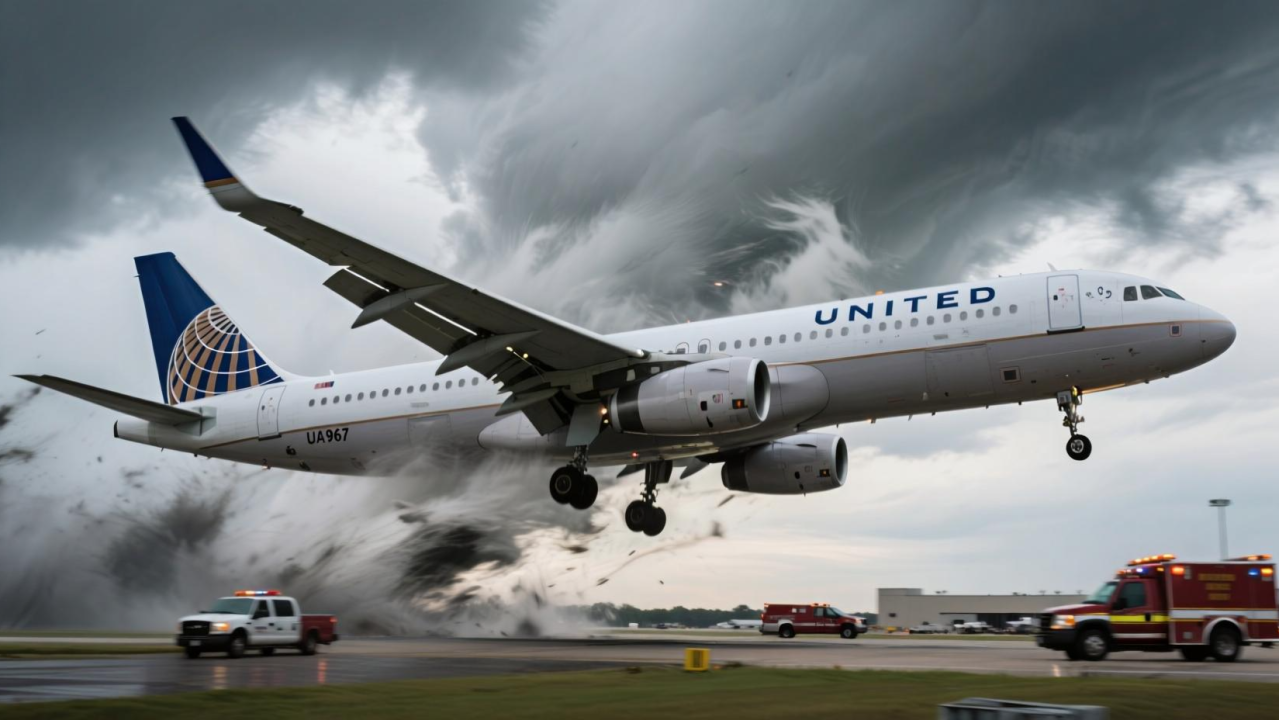
The aviation world is built on a foundation of predictability, yet “United 967” (UA967) has become a flight number frequently associated with the unpredictable. Operating primarily as a flagship long-haul route from Naples, Italy (NAP) to Newark, New Jersey (EWR), this flight serves as a case study in the complex variables of modern transatlantic travel. From mid-ocean technical stops to emergency landings caused by severe turbulence, the history of UA967 highlights the delicate balance between safety, fuel management, and meteorological challenges.
1. The Route Logistics: Naples to Newark
The primary iteration of UA967 is a direct link between Southern Italy and the New York metropolitan area. Stretching approximately 4,400 miles across the Atlantic, the flight typically utilizes the Boeing 767-300ER.
While the 767 is a workhorse of the Atlantic, the westbound journey (Europe to North America) is a “climb” against the Jet Stream. These powerful high-altitude winds can reach speeds of over 200 mph, significantly increasing fuel burn. For a flight departing from a relatively southern European point like Naples, the trajectory often puts the aircraft in a position where fuel margins become a critical factor.
2. The “Technical Stop” Phenomenon
One of the most common reasons for a UA967 diversion is not an emergency, but a “technical stop.”
The Fuel vs. Wind Calculation
When headwinds over the Atlantic are stronger than forecasted, the Boeing 767 may reach a “point of no return” where it cannot safely reach Newark with the required FAA fuel reserves. In these instances, the flight crew coordinates a diversion to Gander (YQX) or St. John’s (YYT) in Newfoundland, Canada, or occasionally Shannon (SNN) in Ireland.
Passenger Impact
For passengers, these diversions turn a 9-hour flight into a 12-hour ordeal. While frustrating, these stops represent the pinnacle of “Safety First” operations—choosing a planned refueling stop over a low-fuel declaration near a busy airport like Newark.
3. July 2025: The Newark Weather Diversion
In July 2025, UA967 made headlines when it was forced to divert to Boston Logan (BOS) after a harrowing attempt to land in New Jersey.
The Missed Approach
After nearly nine hours in the air, the aircraft encountered severe summer thunderstorms over Newark. Following a “missed approach” (a go-around) due to low visibility and wind shear, the pilots determined that holding patterns would deplete their remaining fuel.
Logistics of a Domestic Diversion
Diverting an international flight to a domestic hub like Boston creates a “Customs and Border Protection (CBP)” nightmare. Passengers often remain on the tarmac for hours because the airport must coordinate international processing for a flight that wasn’t scheduled to be there.
4. August 2025: The St. John’s Incident
Just a month later, UA967 faced another major disruption. Already delayed by three hours in Naples due to a mechanical issue, the flight encountered unfavorable winds that forced a diversion to St. John’s (YYT).
This specific incident highlighted the “cascading delay” effect. Because the crew exceeded their “Duty Time” (legal flying hours) due to the initial Naples delay and the added flight time of the diversion, the flight had to be grounded overnight in Canada, requiring United to find hotels for hundreds of passengers in a small city.
5. A Historical Shadow: The 2010 Turbulence Emergency
No discussion of UA967 is complete without mentioning July 21, 2010. At that time, UA967 was a domestic route from Washington Dulles (IAD) to Los Angeles (LAX).
While cruising over the Midwest, the Boeing 777 encountered extreme clear-air turbulence. The aircraft dropped hundreds of feet in seconds, tossing unbuckled passengers and crew against the ceiling. The flight made an emergency diversion to Denver (DEN), where 25 people were hospitalized. This remains one of the most cited examples of why the “fasten seatbelt while seated” rule is vital.
6. The Passenger’s Rights: Compensation and Care
When UA967 diverts, passengers are often entitled to protections under EU Regulation 261/2004 (since the flight departs from Italy).
- Duty of Care: Airlines must provide meals, communications, and overnight hotel stays if the diversion results in an overnight delay.
- Compensation: If the diversion is due to “operational issues” (crew scheduling or preventable mechanical failure) rather than weather, passengers may be eligible for up to €600 in cash compensation.
7. Conclusion: The Reality of Modern Aviation
The diversions of UA967 aren’t a sign of a “broken” flight, but rather a testament to the rigorous safety protocols of the industry. Whether it is a pilot deciding to refuel in Newfoundland rather than risk a low-fuel landing in New York, or a crew diverting to Boston to avoid a thunderstorm, these decisions prioritize human life over schedules.
For the modern traveler, UA967 serves as a reminder: the Atlantic is vast, the weather is powerful, and the “direct flight” is always subject to the laws of physics and safety.