

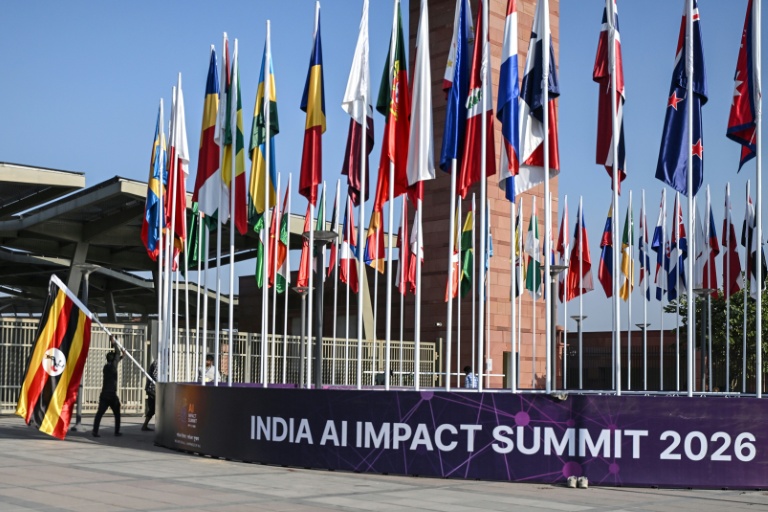
NEW DELHI — In a significant move that underscores its rising technological ambitions, India inaugurated the four-day AI Impact Summit in New Delhi on Monday, bringing together world leaders, top tech executives, and policymakers to chart a course for the future of artificial intelligence. The summit, the first major global AI gathering to be hosted in the Global South, comes at a time of intense excitement about AI’s potential, shadowed by growing anxiety over its societal and ethical risks .
Prime Minister Narendra Modi opened the summit at Bharat Mandapam, positioning India as a key architect in the global conversation on AI governance. The event is the fourth in an annual series following previous summits in Bletchley Park (UK), Seoul, and Paris, and it is notably the largest edition yet . Organisers expect a staggering 250,000 visitors, including 20 national leaders and ministerial delegations from 45 countries .
“This summit further demonstrates that our country is making rapid progress in the field of science and technology,” Modi posted on X before the inauguration, adding that it showcases the strength of India’s youth .
A Stellar Line-Up and Ambitious Goals
The attendee list reads like a who’s who of the tech world. Prominent figures include OpenAI CEO Sam Altman, Google CEO Sundar Pichai, Google DeepMind chief Demis Hassabis, and Anthropic CEO Dario Amodei. From the political sphere, French President Emmanuel Macron and Brazilian President Luiz Inácio Lula da Silva are among the key leaders scheduled to hold talks with Modi . Notably, Nvidia CEO Jensen Huang cancelled his appearance due to unforeseen circumstances, according to reports .
The summit’s agenda is built around three core pillars, or “Sutras”: People, Planet, and Progress . This framework is designed to ensure that the discussions go beyond mere technological advancement to encompass social inclusion, environmental sustainability, and economic development.
India’s IT ministry articulated a vision of democratising the benefits of AI. “The summit will shape a shared vision for AI that truly serves the many, not just the few,” the ministry stated, highlighting the unique perspective a developing nation brings to the table .
The Elephant in the Room: Safety and Accountability
Despite the high-profile collaboration, the summit is taking place against a backdrop of escalating safety concerns. The rapid proliferation of generative AI has led to a surge in deepfakes, misinformation, and other digital harms, bringing the issue of regulation into sharp focus .
A recent global backlash against Elon Musk’s Grok AI tool, which was found to generate sexualised images of real people, including children, has amplified calls for stricter oversight . “Child safety and digital harms are also moving up the agenda, particularly as generative AI lowers the barrier to harmful content,” said Kelly Forbes, director of the AI Asia Pacific Institute .
However, a strong undercurrent of scepticism runs through the summit corridors. Critics question whether such large, multi-stakeholder gatherings can produce concrete action or if they merely serve as a platform for vague commitments.
Amba Kak, co-executive director of the AI Now Institute and a former advisor to the US Federal Trade Commission, who is attending the summit, voiced these concerns. She warned that the wide-ranging agenda might dilute the focus, preventing world leaders from making meaningful, binding commitments . Kak pointed to previous summits where industry pledges resulted in “narrow ‘self-regulatory’ frameworks that position AI companies to continue to grade their own homework” .
This tension between fostering innovation and enforcing safety was a central theme. Seth Hays, an analyst and author of the Asia AI Policy Monitor newsletter, suggested that talks would focus on finding a balance: “ensuring that governments put up some guardrails, but don’t throttle AI development” .
India’s Strategic Play
For India, hosting the summit is a strategic move to cement its leadership in the AI decade. The country recently jumped to third place in a global AI competitiveness ranking by Stanford University, surpassing tech-heavy nations like South Korea and Japan . Yet, experts caution that India still lags significantly behind the US and China in core AI capabilities and will need robust international partnerships to bridge the gap .
The summit is designed to be more than just a talk-shop. With over 700 planned sessions, it includes a CEO roundtable with Modi on February 19, focusing on responsible AI practices and investment. A Leaders’ Declaration is expected to be adopted on the final day, outlining a collective path forward .
As the world’s attention turns to New Delhi, the India AI Impact Summit stands at a crossroads. It presents an opportunity to shape a global AI governance model that is inclusive and accountable. The challenge, as sceptics like Kak highlight, will be to move from ambitious dialogue to binding delivery, ensuring that the promise of AI does not come at the cost of fundamental safety and ethical principles .