

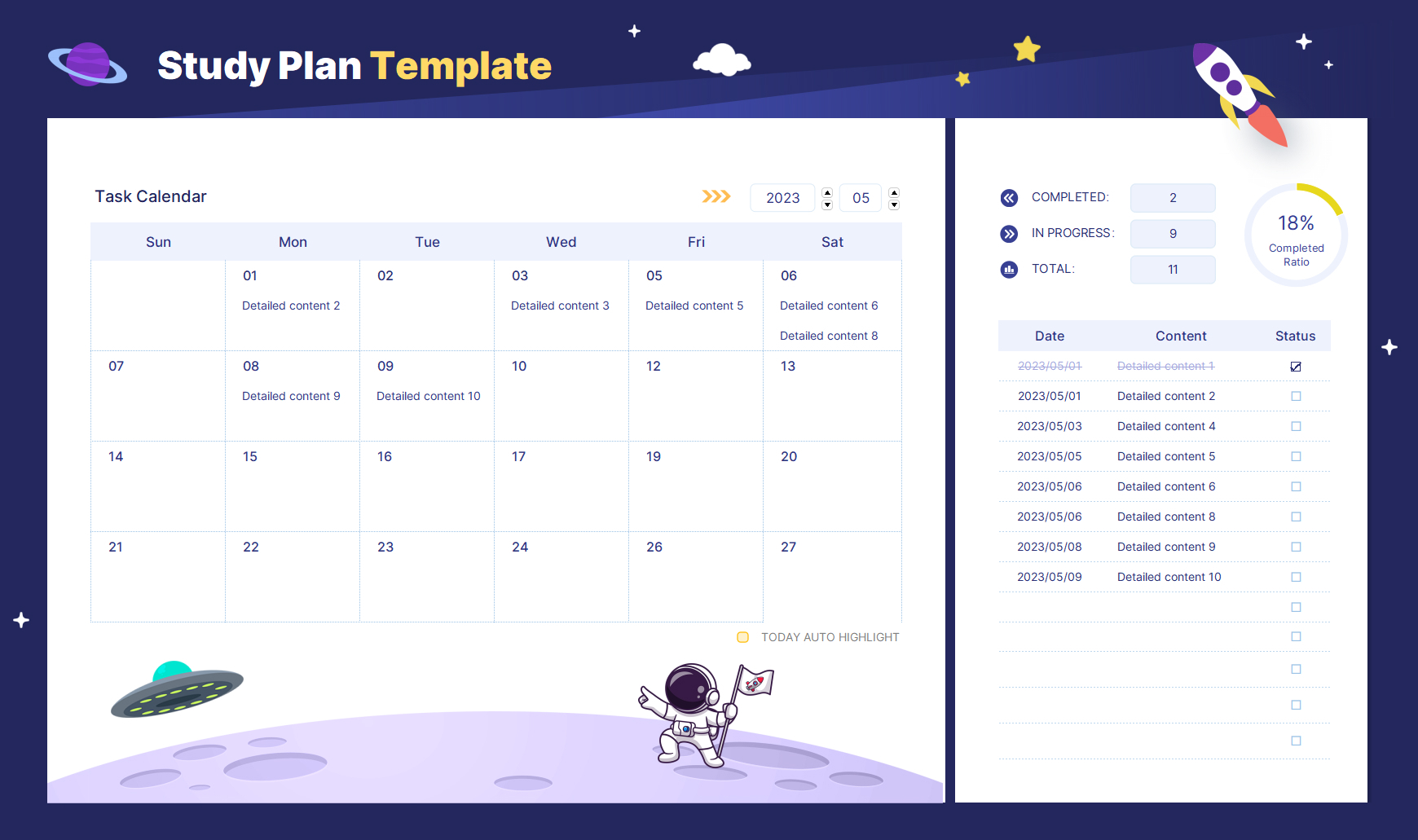
Studying becomes much easier when you have a clear plan. Whether you are preparing for exams, managing school assignments, learning online, or working toward a personal goal, knowing what to study and when to study can save time and reduce stress.
A Study Planner Template provides a simple structure for organizing your study schedule. Instead of keeping everything in your memory or writing tasks on random pieces of paper, you can use one organized planner to track subjects, assignments, revision sessions, deadlines, and personal goals.
What Is a Study Planner Template?
A Study Planner Template is a ready-made planning format designed to help students organize their academic activities.
It can include sections for:
- Subjects
- Study sessions
- Assignments
- Exams
- Deadlines
- Revision goals
- Daily tasks
- Weekly targets
- Notes
The template can be printed or used digitally, depending on your preference.
Why Use a Study Planner?
Without a study schedule, it is easy to spend too much time on one subject while forgetting another.
A planner gives you a visual overview of your responsibilities. You can see what needs to be completed and decide how much time should be dedicated to each task.
A well-organized study planner can help you:
- Manage your time
- Remember deadlines
- Organize assignments
- Prepare for exams
- Create consistent study habits
- Reduce last-minute work
- Track your progress
Create a Realistic Study Schedule
One of the biggest mistakes students make is creating schedules that are too difficult to follow.
A good schedule should fit your actual routine.
Consider your classes, work, family responsibilities, meals, sleep, exercise, and free time before assigning study sessions.
Instead of planning eight hours of studying every day, create smaller sessions that you can realistically maintain.
Consistency is more valuable than an unrealistic schedule.
Daily Study Planner
A daily study planner is useful when you have several tasks to complete within one day.
A simple layout can include:
| Time | Subject | Task | Status |
|---|---|---|---|
| 9:00 AM | Mathematics | Practice exercises | ✓ |
| 11:00 AM | English | Reading | ✓ |
| 2:00 PM | Science | Review notes | |
| 4:00 PM | History | Research assignment |
This format makes it easy to see exactly what needs to be done.
Weekly Study Planner
A weekly planner provides a broader view.
You can assign specific subjects to different days and reserve additional time for revision or unfinished tasks.
For example:
Monday: Mathematics and Science
Tuesday: English and History
Wednesday: Mathematics and Computer Studies
Thursday: Science and English
Friday: Revision
Saturday: Practice Tests
Sunday: Review and Planning
A weekly format is especially useful for students managing several subjects simultaneously.
Monthly Study Planning
Monthly planning is helpful when preparing for important examinations or long-term projects.
At the beginning of each month, list major deadlines and exams.
Then divide larger goals into smaller weekly tasks.
For example, if you need to prepare ten chapters for an examination, you could divide them across several weeks rather than trying to study everything immediately before the exam.
Prioritize Important Tasks
Not every study task has the same level of importance.
Use your planner to identify tasks that have urgent deadlines or require additional preparation.
You can divide tasks into categories such as:
High Priority: Exam preparation and urgent assignments
Medium Priority: Regular homework and revision
Low Priority: Optional reading and additional practice
This approach helps you focus your energy where it is most needed.
Include Breaks
A productive study plan should include breaks.
Studying continuously for long periods can make it difficult to maintain concentration.
Short breaks give you an opportunity to step away, stretch, drink water, or simply relax before returning to your work.
The goal is not to eliminate breaks but to use them intentionally.
Track Your Progress
A Study Planner Template can also function as a progress tracker.
After completing a task, mark it as finished.
You can use:
- Check marks
- Colors
- Symbols
- Percentages
- Progress bars
Seeing completed tasks can provide motivation and make large projects feel more manageable.
Plan Around Exams
Exams require more structured preparation than ordinary study sessions.
Start by listing each examination date and the topics that need to be covered.
Then create a revision schedule.
Try to leave some extra time for practice tests and reviewing difficult subjects.
Starting early can reduce the pressure that comes with last-minute preparation.
Use a Planner for Assignments
Assignments can easily become overwhelming when several deadlines arrive at the same time.
Write every important assignment in your planner and include its deadline.
For larger projects, divide the work into smaller stages.
For example:
- Choose a topic
- Research
- Create an outline
- Write the first draft
- Edit
- Proofread
- Submit
This makes a large assignment easier to manage.
Study Planner for Online Learning
Online students can particularly benefit from a study planner.
Without a fixed classroom schedule, it can be tempting to postpone lessons or assignments.
A planner can create structure by assigning specific times for watching lectures, reading course materials, completing assignments, and reviewing notes.
This helps create a routine even when studying from home.
Make Your Planner Easy to Use
A complicated planner can become another source of stress.
Keep your layout simple and easy to understand.
Use clear headings and avoid filling every available space with information.
Your planner should help you organize your studies rather than require a lot of time to maintain.
Digital or Printable Study Planner?
Both formats have advantages.
Printable Planner
A printable planner can be placed on a desk, wall, or notebook.
It is useful for people who enjoy writing by hand and want their schedule visible throughout the day.
Digital Planner
A digital planner can be accessed from a computer, tablet, or smartphone.
It may be convenient for students who already manage their schoolwork digitally.
The best option is the one you are most likely to use consistently.
Avoid Overplanning
Planning every minute of your day may seem productive, but it can become difficult to maintain.
Leave some flexibility in your schedule.
Unexpected assignments, delays, family responsibilities, and changes in plans can happen.
A flexible planner allows you to move tasks without feeling that the entire schedule has failed.
Review Your Planner Regularly
At the end of each week, spend a few minutes reviewing your progress.
Ask yourself:
- Which tasks did I complete?
- Which tasks remain unfinished?
- Which subjects need more attention?
- Did I give myself enough time?
- What should I change next week?
This simple review can help you create better schedules over time.
Tips for Better Study Planning
Here are some simple habits that can make your study planner more effective:
- Set clear goals.
- Break large tasks into smaller steps.
- Prioritize important deadlines.
- Schedule regular revision.
- Include breaks.
- Keep your schedule realistic.
- Track completed work.
- Leave room for unexpected tasks.
- Review your progress every week.
- Adjust your plan when necessary.
Final Thoughts
A Study Planner Template can turn an unorganized study routine into a clear and manageable schedule.
It helps students see upcoming responsibilities, organize subjects, prepare for exams, track assignments, and make better use of their available time.
The most effective planner is not necessarily the most complicated one. A simple template that you actually use every day can be far more valuable than an elaborate schedule that quickly gets abandoned.
Start with your main subjects, deadlines, and goals. Divide larger tasks into smaller steps, schedule realistic study sessions, and review your progress regularly.
With consistent planning and good study habits, you can make your academic routine more organized, focused, and productive.