

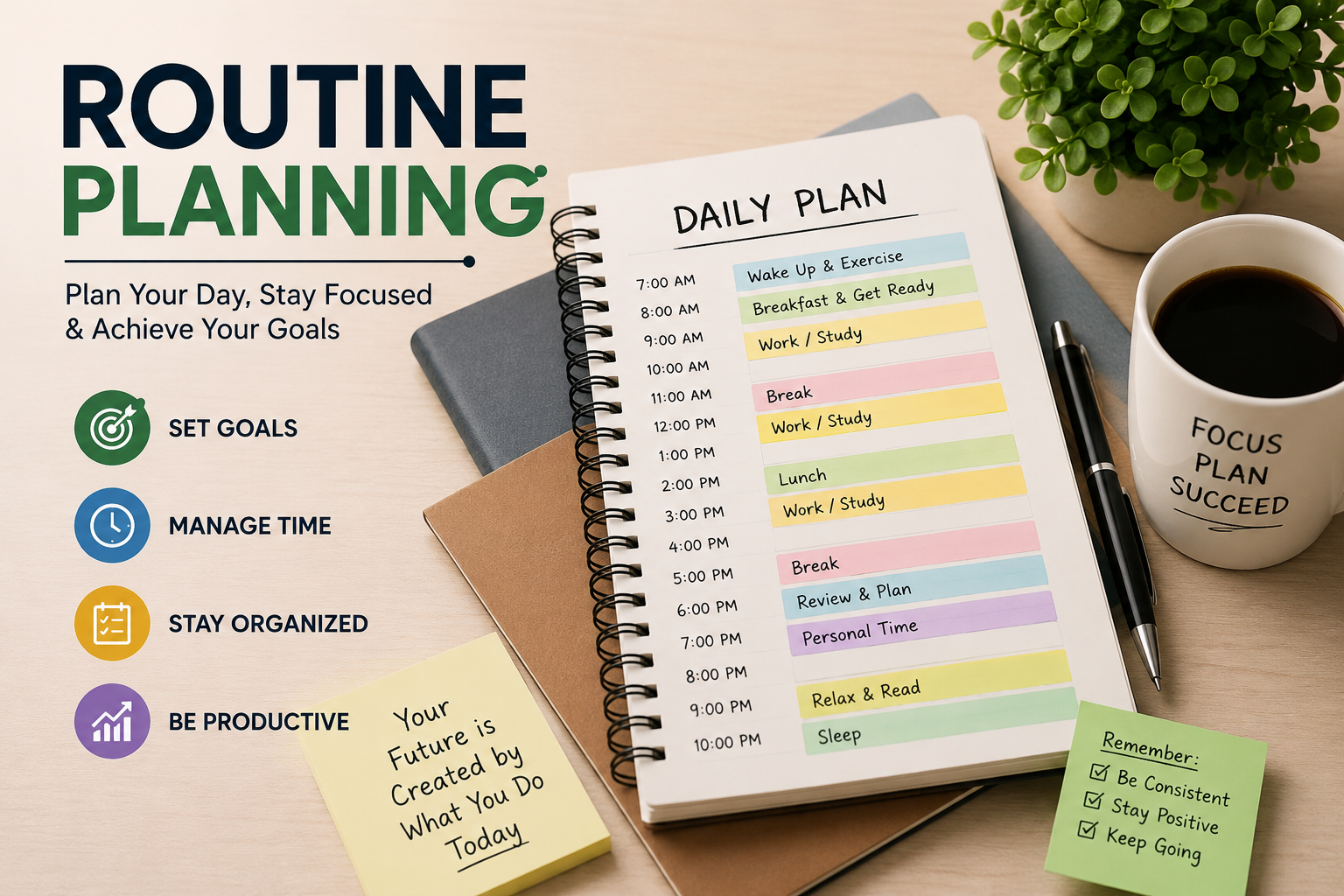
Modern life can become overwhelming when work, family responsibilities, personal goals, appointments, and everyday tasks all compete for attention. Without a clear structure, it is easy to forget important activities or spend too much time on things that do not contribute to meaningful goals.
This is where routine planning can make a difference. A well-designed routine provides structure without requiring every minute of the day to be controlled. It helps people understand what needs to be done, when it should happen, and how daily activities connect with larger goals.
Routine planning is not about creating a perfect schedule. It is about building practical habits that make everyday life easier to manage.
What Is Routine Planning?
Routine planning is the process of organizing recurring activities into a consistent daily, weekly, or monthly structure.
A routine may include activities such as:
- Morning preparation
- Work or study
- Exercise
- Household responsibilities
- Meal preparation
- Personal projects
- Relaxation
- Family time
- Evening preparation
The purpose is to reduce unnecessary decision-making and create a predictable framework for important activities.
Why Routine Planning Is Important
A structured routine can help people use their time more intentionally.
When recurring tasks are planned in advance, there is less need to repeatedly decide what should happen next. This can make busy days feel more manageable.
Routine planning can also help people identify where their time is going. Once activities are written down, it becomes easier to notice unnecessary commitments and opportunities for improvement.
Routine Planning and Productivity
Productivity is not simply about doing more tasks. It is about using time and energy effectively.
A useful routine gives priority to important activities instead of allowing every new request to interrupt the day.
For example, someone may reserve specific periods for focused work while keeping other periods for communication, household tasks, or personal activities.
This approach creates a better balance between productivity and flexibility.
Creating a Realistic Routine
One of the biggest mistakes people make is creating routines that are too ambitious.
A schedule might look perfect on paper but become difficult to follow in real life.
Instead of filling every hour, leave some space between activities. Unexpected tasks, delays, and changes are normal.
A realistic routine should support your life rather than make it more stressful.
Start With Your Priorities
Before creating a routine, identify the activities that matter most.
Think about responsibilities that cannot be ignored as well as personal goals that deserve regular attention.
For example, priorities might include work, education, health, family, financial management, or a creative project.
Once priorities are clear, routine planning becomes easier because important activities can receive appropriate time.
Build a Morning Routine
A consistent morning routine can create a useful starting point for the day.
It does not need to be complicated. Simple activities such as getting ready, reviewing priorities, preparing breakfast, and organizing essential tasks may be enough.
Some people prefer quiet time in the morning, while others work better after immediately beginning their main responsibilities.
The best morning routine is the one that fits your lifestyle.
Create an Evening Routine
Evening routines can help prepare for the following day.
A simple evening routine might include organizing belongings, reviewing unfinished tasks, preparing clothes, checking the next day’s schedule, and setting aside time to relax.
Preparing in advance can reduce the number of decisions required in the morning.
Weekly Routine Planning
Daily routines are useful, but weekly planning provides a broader view.
At the beginning or end of each week, review upcoming responsibilities and decide which activities deserve attention.
A weekly plan can include:
- Important appointments
- Work deadlines
- Household tasks
- Shopping
- Exercise
- Personal projects
- Social activities
- Rest periods
Weekly planning helps prevent important tasks from being forgotten.
Monthly Routine Planning
Some responsibilities do not happen every week. Monthly planning can help organize activities that occur less frequently.
Examples include reviewing finances, organizing documents, deep cleaning, checking subscriptions, planning upcoming events, or evaluating personal goals.
A monthly review also provides an opportunity to adjust routines that are no longer working.
Use a Planner or Template
A physical planner or digital planning tool can make routines easier to visualize.
Different people prefer different formats. Some like handwritten planners, while others prefer calendars, mobile applications, spreadsheets, or printable templates.
The tool itself is less important than using a system consistently.
A simple planner with clear sections can often be more useful than a complicated system that becomes difficult to maintain.
Time Blocking for Better Organization
Time blocking is a technique in which specific periods are assigned to particular types of activities.
For example, a person might reserve one period for focused work, another for communication, and another for household responsibilities.
The benefit is that tasks receive dedicated attention instead of constantly competing with one another.
However, time blocks should remain flexible enough to accommodate unexpected changes.
Creating a Flexible Routine
A routine should provide structure without becoming restrictive.
Unexpected responsibilities are part of everyday life. Meetings may take longer than expected, family needs can change, and urgent tasks can appear without warning.
For this reason, leave buffer time between important activities.
A flexible routine is easier to maintain over the long term than a schedule that collapses whenever something unexpected happens.
Routine Planning for Work
Work routines can improve organization by creating consistent periods for important responsibilities.
Employees and business owners can establish routines for checking messages, planning priorities, completing focused work, attending meetings, and reviewing progress.
Avoiding constant task switching can also make focused work more efficient.
Routine Planning for Students
Students can use routine planning to organize classes, assignments, revision, projects, and personal activities.
Instead of waiting until deadlines approach, students can assign regular study periods to different subjects.
Short and consistent study sessions can be easier to maintain than attempting to complete everything at the last minute.
Routine Planning at Home
Household responsibilities can also benefit from structured planning.
Cleaning, shopping, meal preparation, laundry, and maintenance can be assigned to specific days or periods.
This prevents household tasks from accumulating until they become overwhelming.
Sharing responsibilities among household members can make routines even more effective.
Planning for Personal Goals
Routine planning becomes particularly useful when working toward long-term goals.
Large goals can feel difficult because the final result may seem far away. Breaking them into recurring activities makes progress more manageable.
For example, someone learning a skill can dedicate a small amount of time each day or several sessions each week to practice.
Consistency often matters more than completing a huge amount of work at once.
Avoiding an Overloaded Routine
A routine can become counterproductive when it contains too many activities.
If every minute is scheduled, there may be no time for rest, unexpected responsibilities, or spontaneous activities.
Avoid adding tasks simply because there is empty space.
A good routine should contain enough structure to provide direction while leaving room for real life.
Common Routine Planning Mistakes
Several mistakes can make routines difficult to maintain.
One common mistake is trying to change too many habits at once. Another is creating unrealistic schedules based on ideal circumstances.
People may also abandon a routine after missing one activity.
Missing a task does not mean the entire plan has failed. The goal is to return to the routine and continue.
How to Maintain a Routine
Consistency becomes easier when routines are simple.
Start with a few important activities and gradually add more if necessary.
Use reminders when helpful, keep planning tools accessible, and review progress regularly.
It can also be useful to connect new habits with existing activities. For example, reading after breakfast or reviewing the next day’s priorities before bed can make the new behavior easier to remember.
Reviewing and Improving Your Routine
A routine should not remain unchanged forever.
At the end of each week or month, ask yourself:
- What worked well?
- What caused problems?
- Which activities took too much time?
- What can be simplified?
- Are my priorities still the same?
- Is there enough time for rest?
These questions help turn routine planning into an ongoing improvement process.
The Role of Technology in Routine Planning
Digital tools can make routine management more convenient.
Calendar applications, reminder systems, task managers, note-taking tools, and planning apps can help users organize recurring activities.
Automation can also reduce repetitive planning tasks. For example, recurring reminders can be created for activities that happen regularly.
However, technology should simplify planning rather than create another source of distraction.
Routine Planning and Work-Life Balance
A healthy routine should include more than work and responsibilities.
Rest, hobbies, relationships, outdoor activities, and personal time are also important parts of a balanced schedule.
Constant productivity is not sustainable. Regular breaks can help people maintain energy and focus.
Routine planning should therefore consider both achievement and recovery.
The Future of Routine Planning
Planning tools are becoming increasingly intelligent. Digital calendars and productivity applications can now provide reminders, recurring schedules, task suggestions, and automated organization.
Artificial intelligence may make planning even more personalized by helping users identify patterns and adjust schedules.
Despite these developments, the basic principle will remain the same: effective routine planning should help people spend their time according to their priorities.
Frequently Asked Questions
What is routine planning?
Routine planning is the process of organizing recurring activities into a practical daily, weekly, or monthly structure.
How can routine planning improve productivity?
It can help prioritize important tasks, reduce unnecessary decision-making, organize recurring responsibilities, and create dedicated time for focused activities.
Should every hour be scheduled?
No. Leaving free time and buffers for unexpected events makes a routine more flexible and sustainable.
How do I create a routine that I can actually follow?
Start with a few important activities, keep the schedule realistic, and gradually develop additional habits instead of changing everything at once.
Can a planner help with routine planning?
Yes. A physical or digital planner can provide a clear overview of recurring activities, priorities, appointments, and goals.
Conclusion
Routine planning is a simple but powerful way to bring structure to everyday life. By organizing recurring activities, identifying priorities, and creating realistic schedules, people can reduce unnecessary stress and make better use of their time.
The most effective routine is not necessarily the most detailed one. It is the routine that can be followed consistently while still allowing room for unexpected events, rest, and personal priorities.
Whether you are managing work, studies, household responsibilities, or long-term goals, a practical routine can provide direction without taking away flexibility.
Start small, review your progress, and adjust your routine as your needs change. Over time, consistent planning can turn ordinary daily activities into a system that supports both productivity and a more balanced lifestyle.